

Working In a Series
/When I first started painting, I wanted to experiment with different techniques and concepts, but I always felt this pull to "tighten up" and treat each painting as precious. The result usually felt lacking, or maybe just unresolved. Working across multiple pieces at once changed that — it let me experiment freely without worrying about ruining the one painting I'd had time for that week. A series asks you to explore a subject, technique, or idea from several angles at once, surfacing different issues along the way: composition, light, mark-making, edges, values, representation, abstraction. It's also a good way to see your own tendencies and strengths clearly, even as you push into new territory.
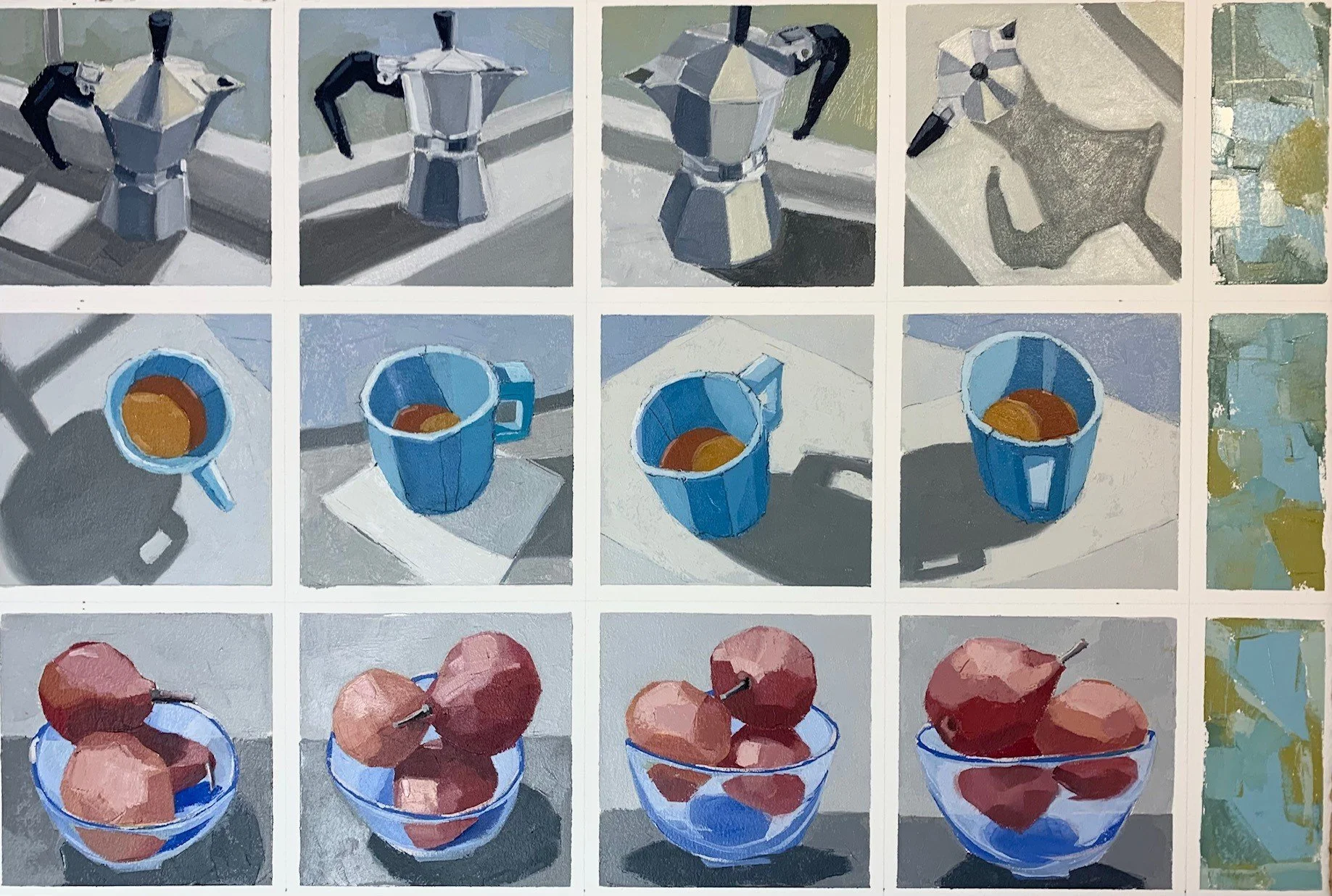
5x5 oil on paper - composition studies for small stillifes
When I begin a series, I usually start with small sketches gridded out on a large sheet of paper — sometimes as small as 2.5" each, like the example below, sometimes 5" square or more, like the example above. Working this small keeps the focus almost entirely on composition. There's simply not room for much detail, and yet these little sketches can still be evocative — suggesting space, mood through value, even a hint of mark-making to come. Charcoal, graphite, and ink tend to work well at this stage — they offer a lot of range and subtlety for an economy effort.
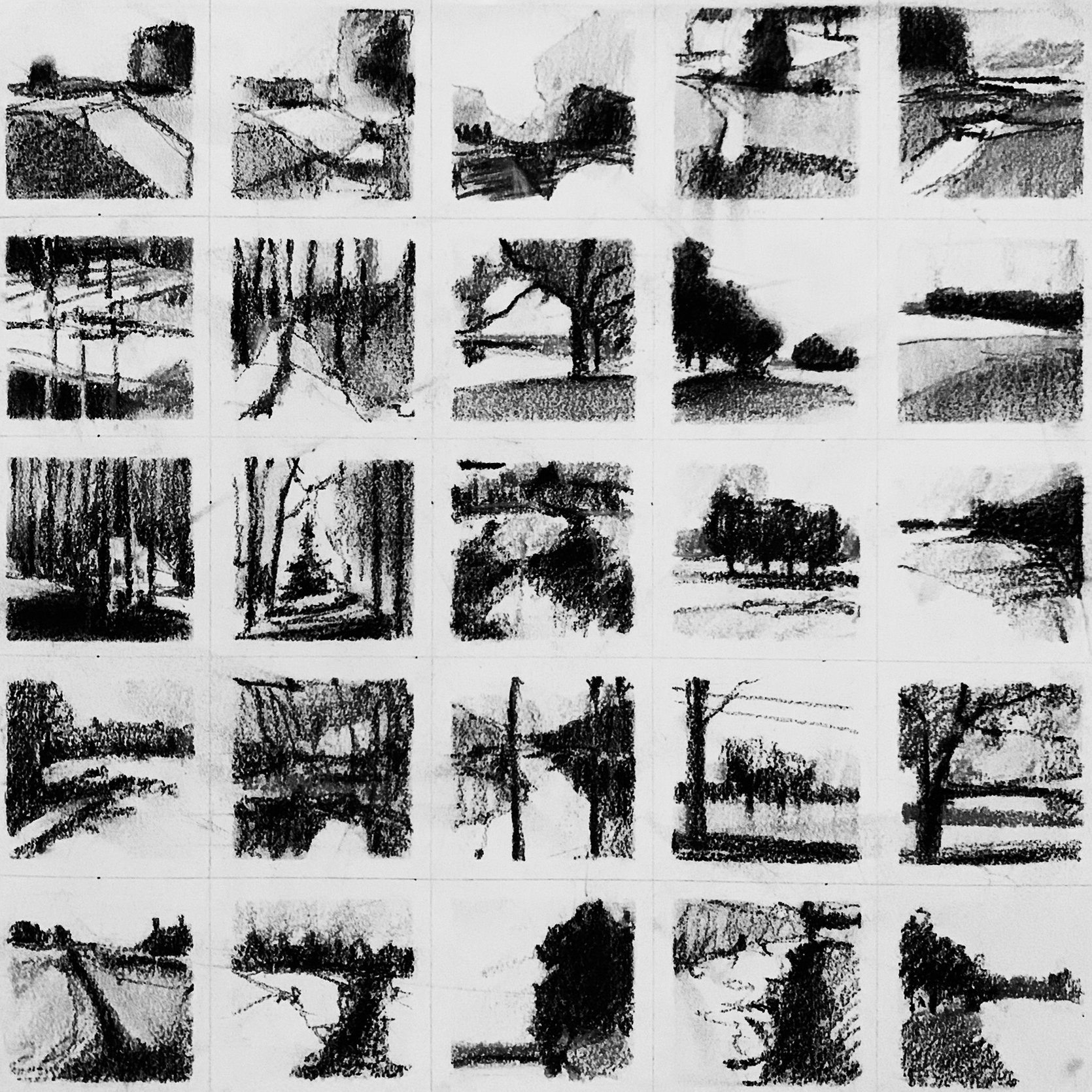
2.5x2.5 charcoal on paper - Charles River Peninsula 1 series - This sheet actually sold as one piece which I titled Deviations From Memory..
As I push and pull at ideas about composition and subject, I'll work a grid of small paintings on paper — a quick way to test out color palettes and mark-making. Sometimes these flatten into abstract compositions that intrigue me, and I'll start scaling them up, testing them on different surfaces. The grid Charles River Peninsula 2 eventually spawned several larger compositions, along with new ideas for approaching abstract landscape painting.
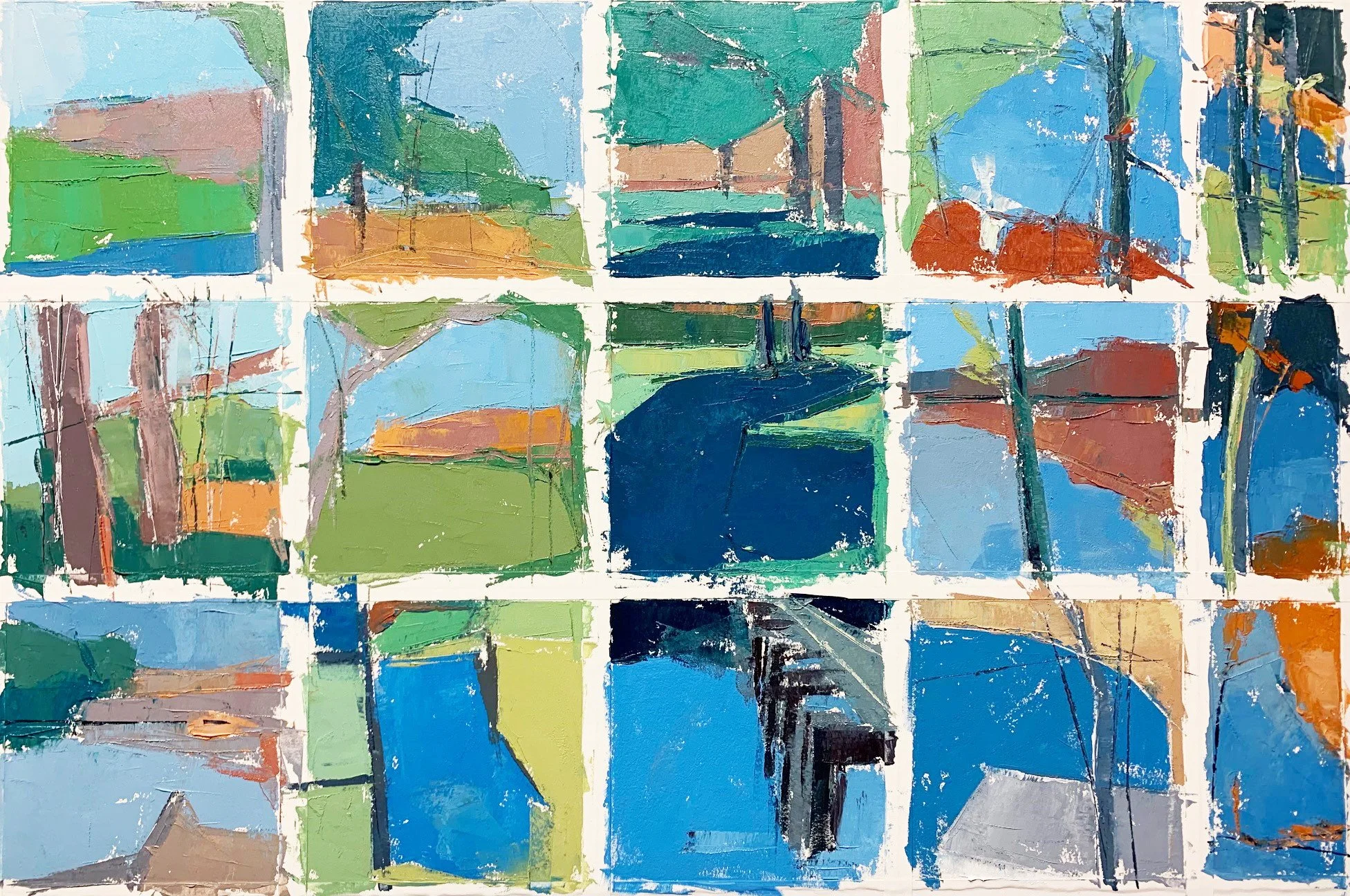
5x5 oil and charcoal on paper - Charles River Peninsula 2 series- studies for abstract landscapes
From the Charles River Peninsula 2 grid (above), a more focused exploration emerged: depicting foreground and midground as large fields of color. Below is the beginning of a series on estuaries, whose earliest hints trace back to that grid. I started with graphite sketches, working out the main shapes and arranging dark and light values, then moved to oil-on-paper sketches at the same size to establish a color palette and begin hinting at the scale of the mark-making.
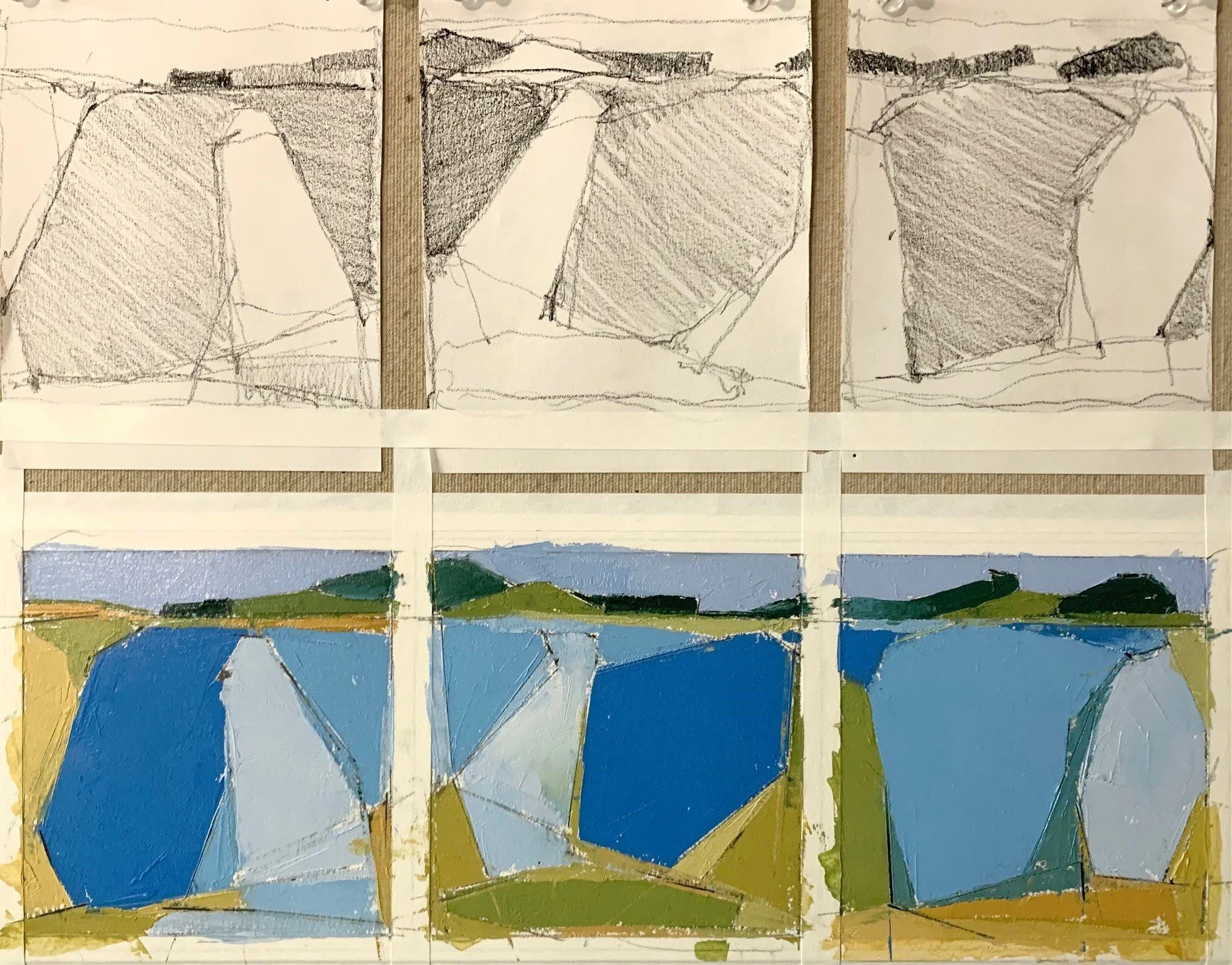
5x5 graphite on paper and oil on paper - abstract landscape studies on the theme of estuaries
From the estuaries concept, six 36x36 canvases emerged, arranged as two three-panel triptychs. Jumping up in scale is where I tend to struggle most with the transition of mark-making. The original grid sketches, small as they are, become a great reminder of the potential energy in the piece — especially at the borders between larger fields of color, where there's real possibility for strong linework and a sense of depth. If the large fields tend to flatten out, the border areas fold in and out visually, evoking more complex three-dimensional moments.
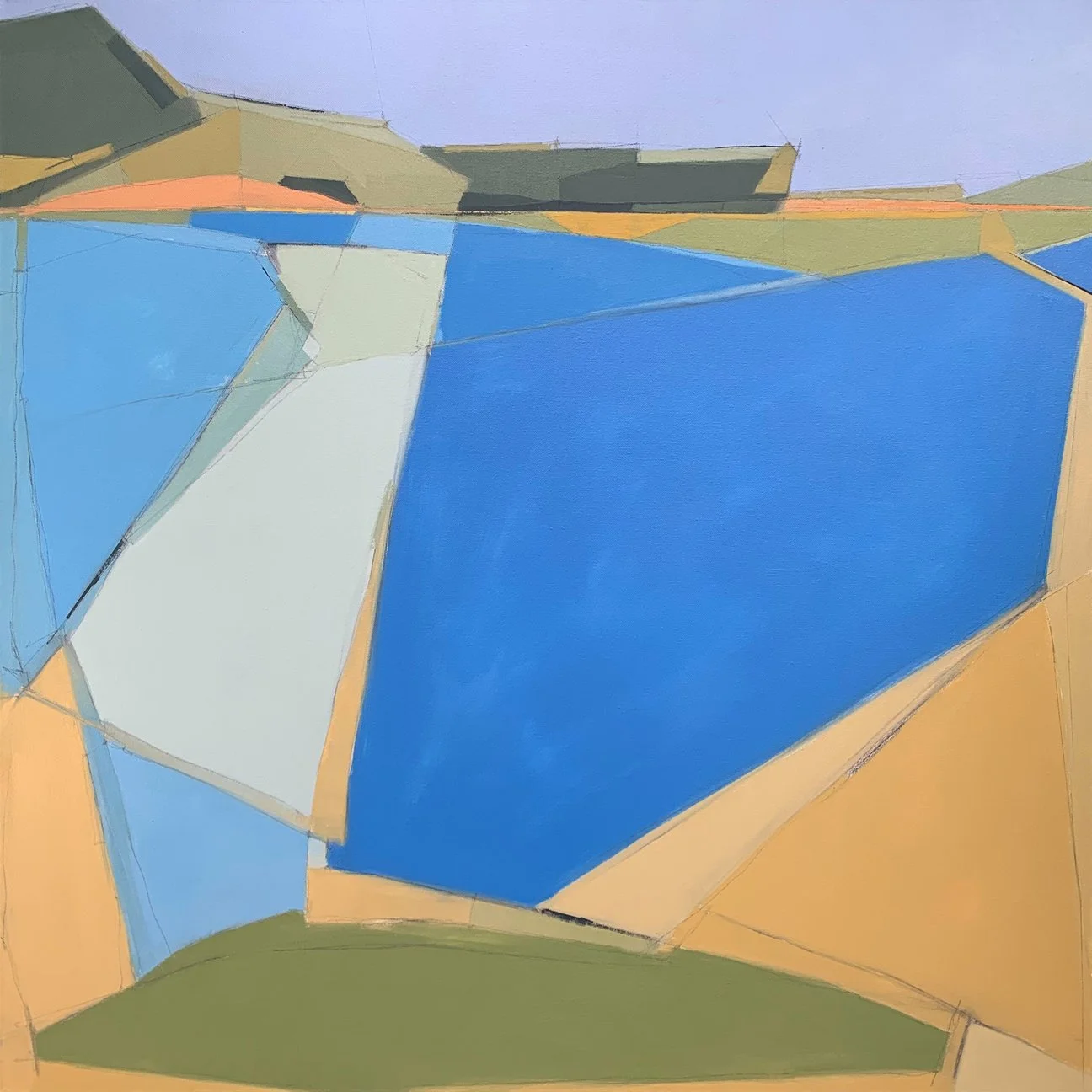
36x36 oil and graphite on canvas from the Estuary series
My workshops on working in a series focus on the ideas and exploration rather than specific techniques in any one particular medium. Students bring supplies for their medium of choice and I help them build a process to explore issues they’re hoping to resolve.
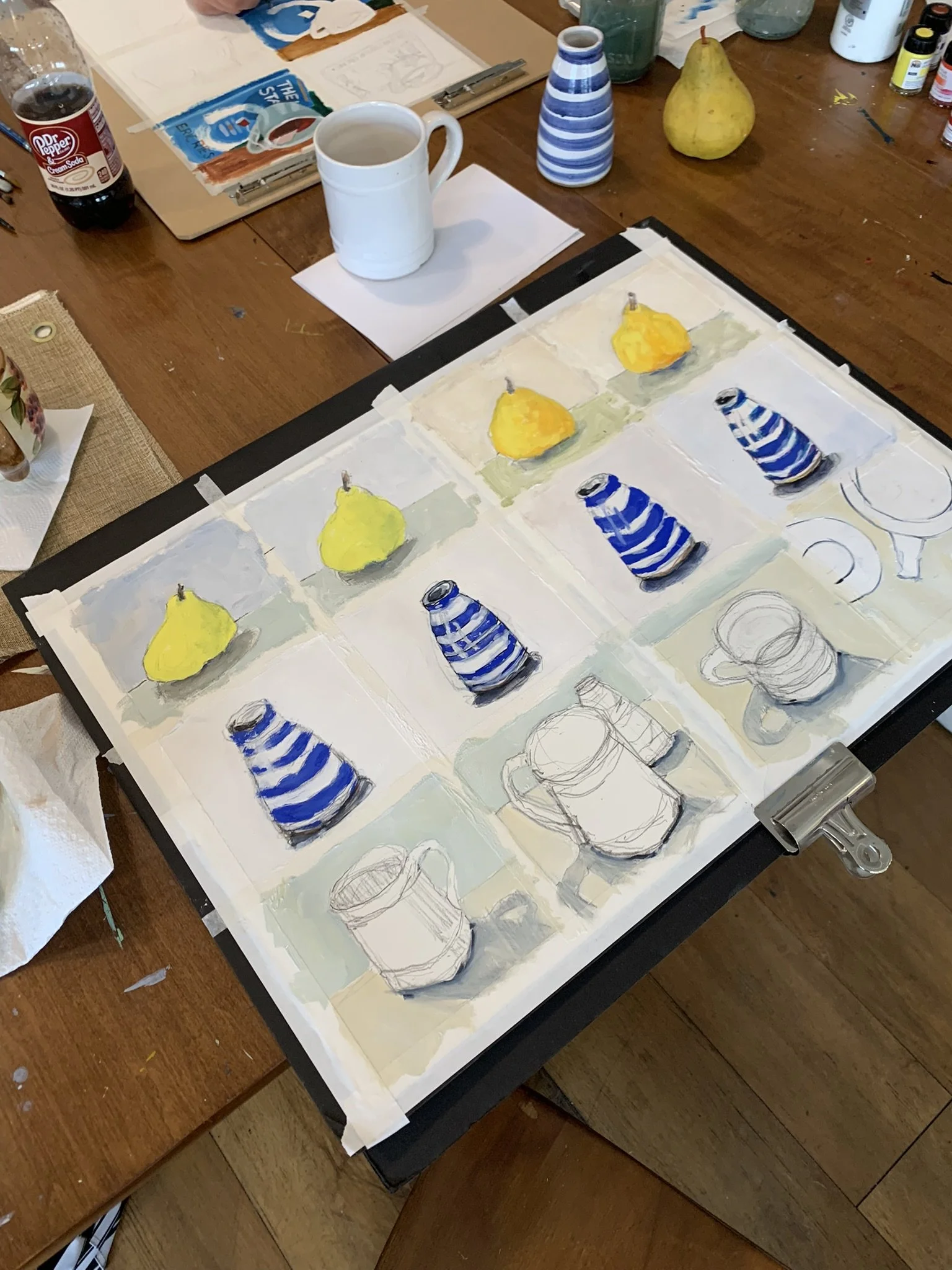
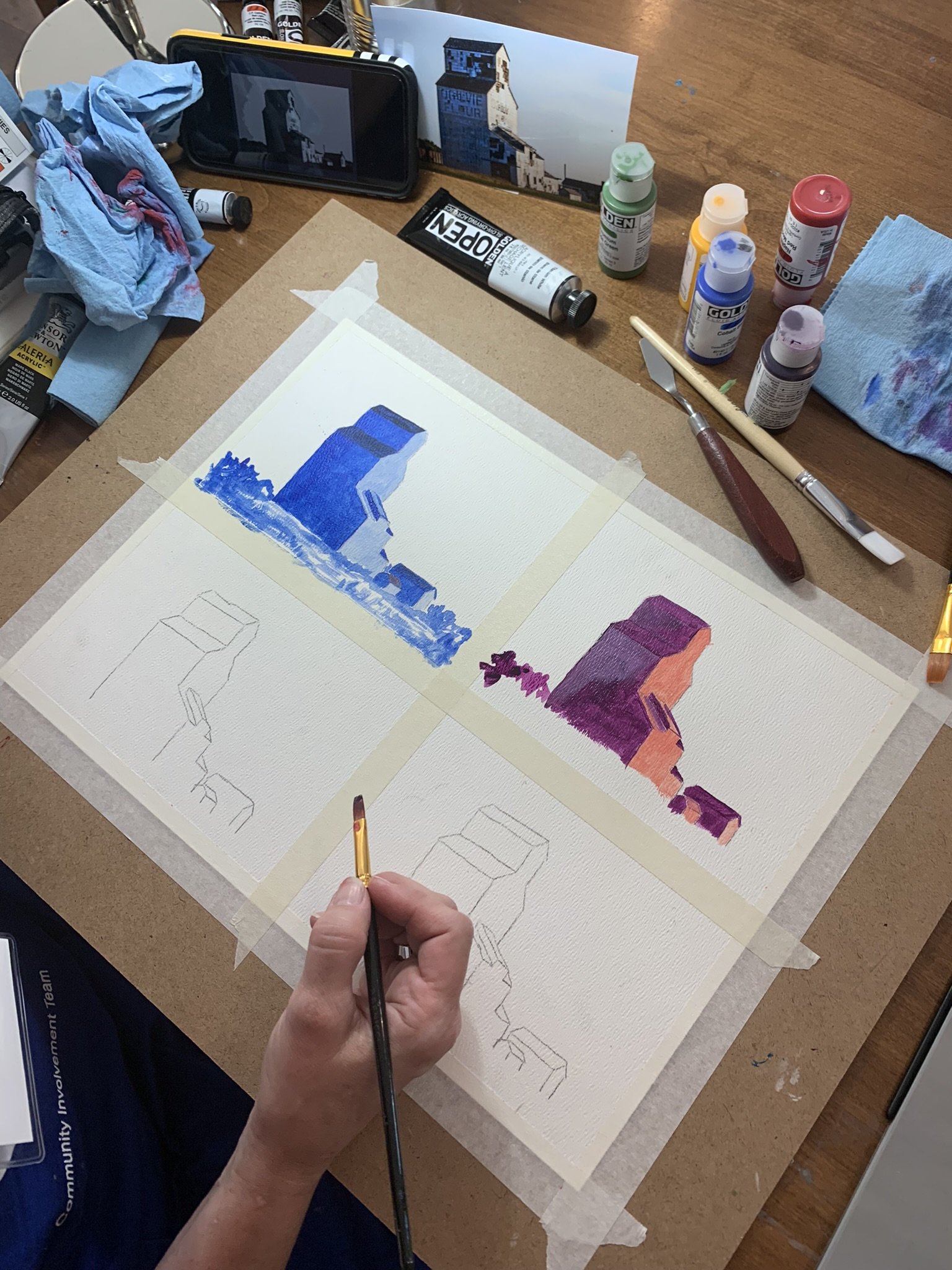
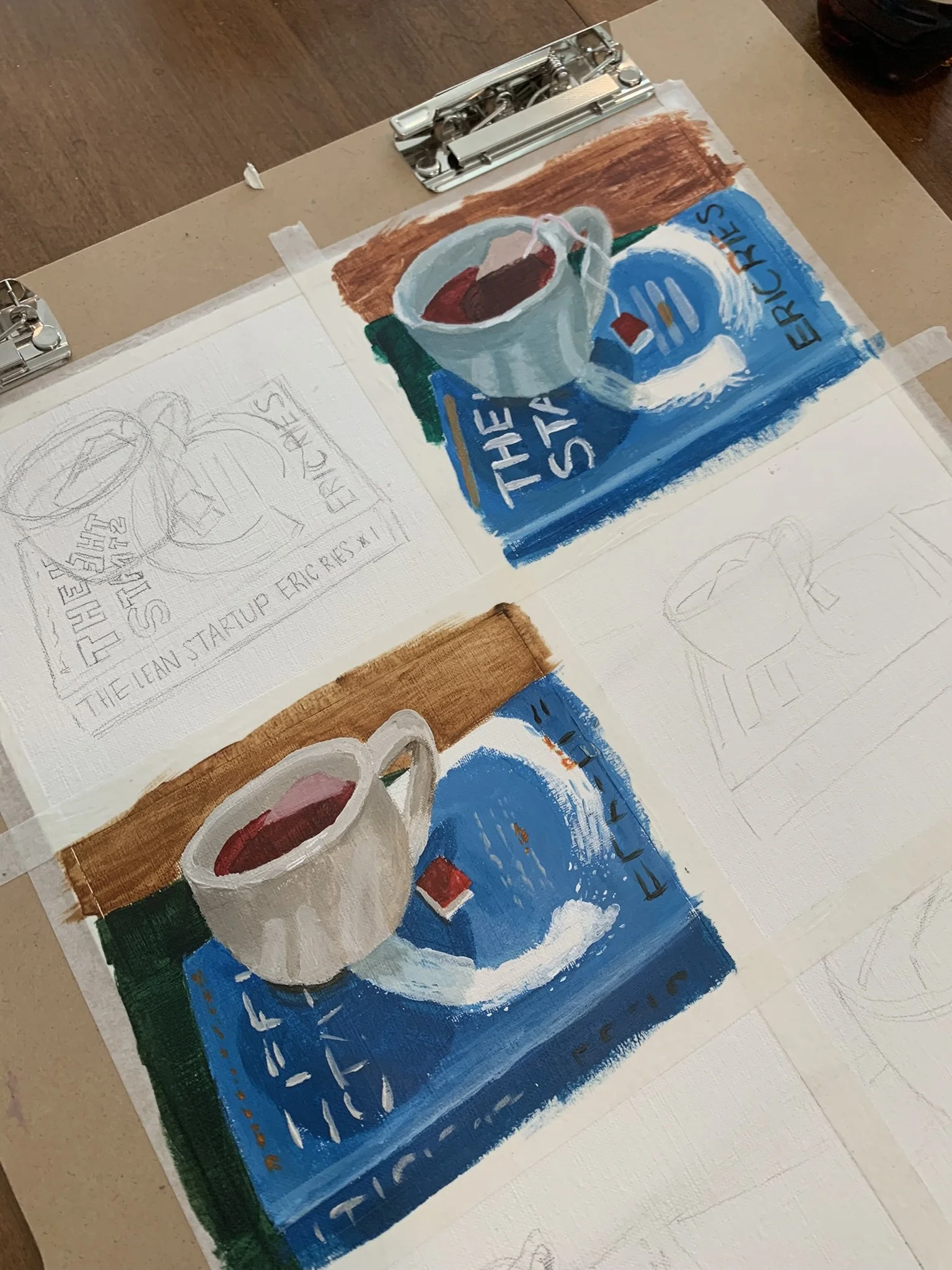
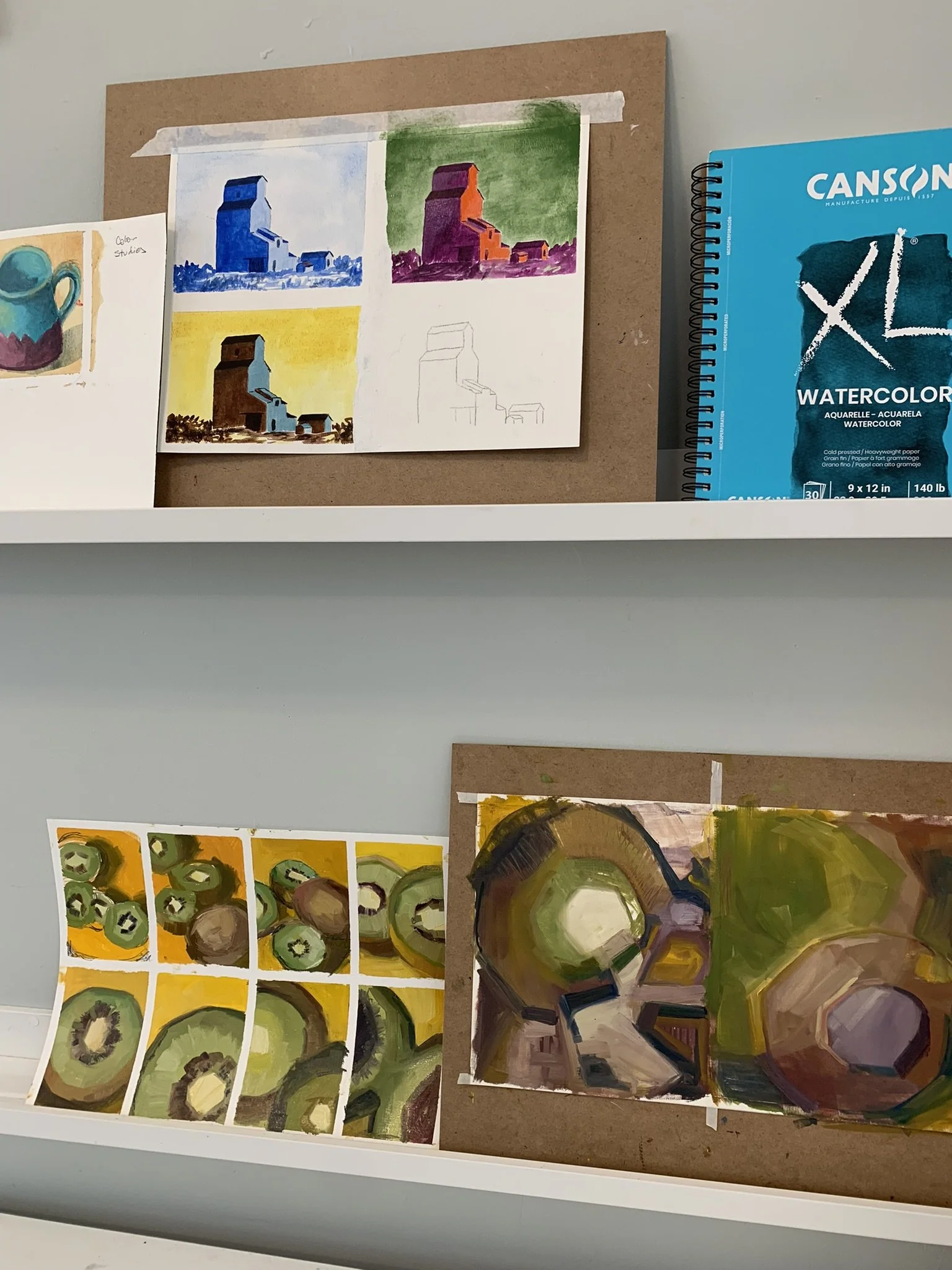
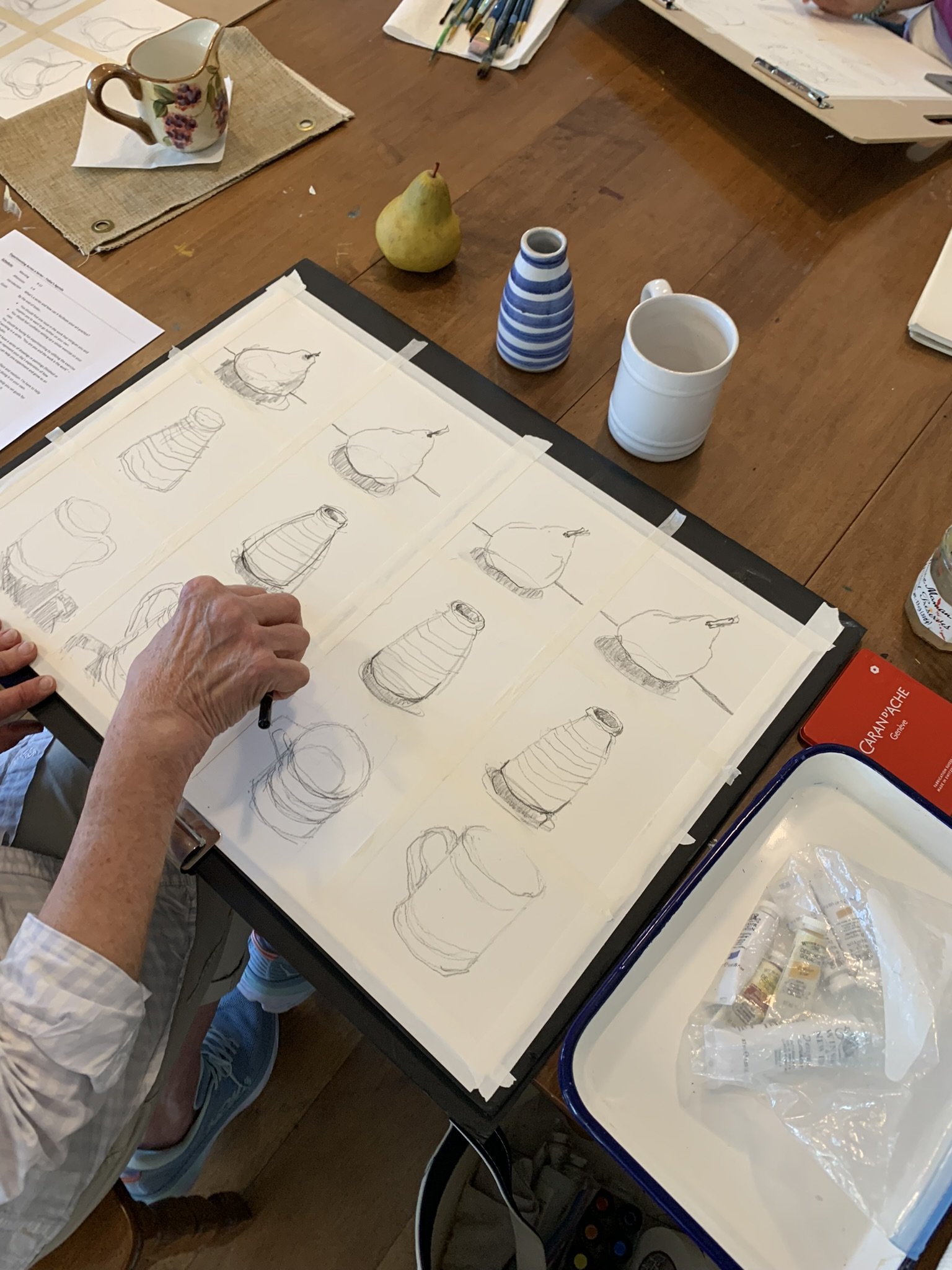
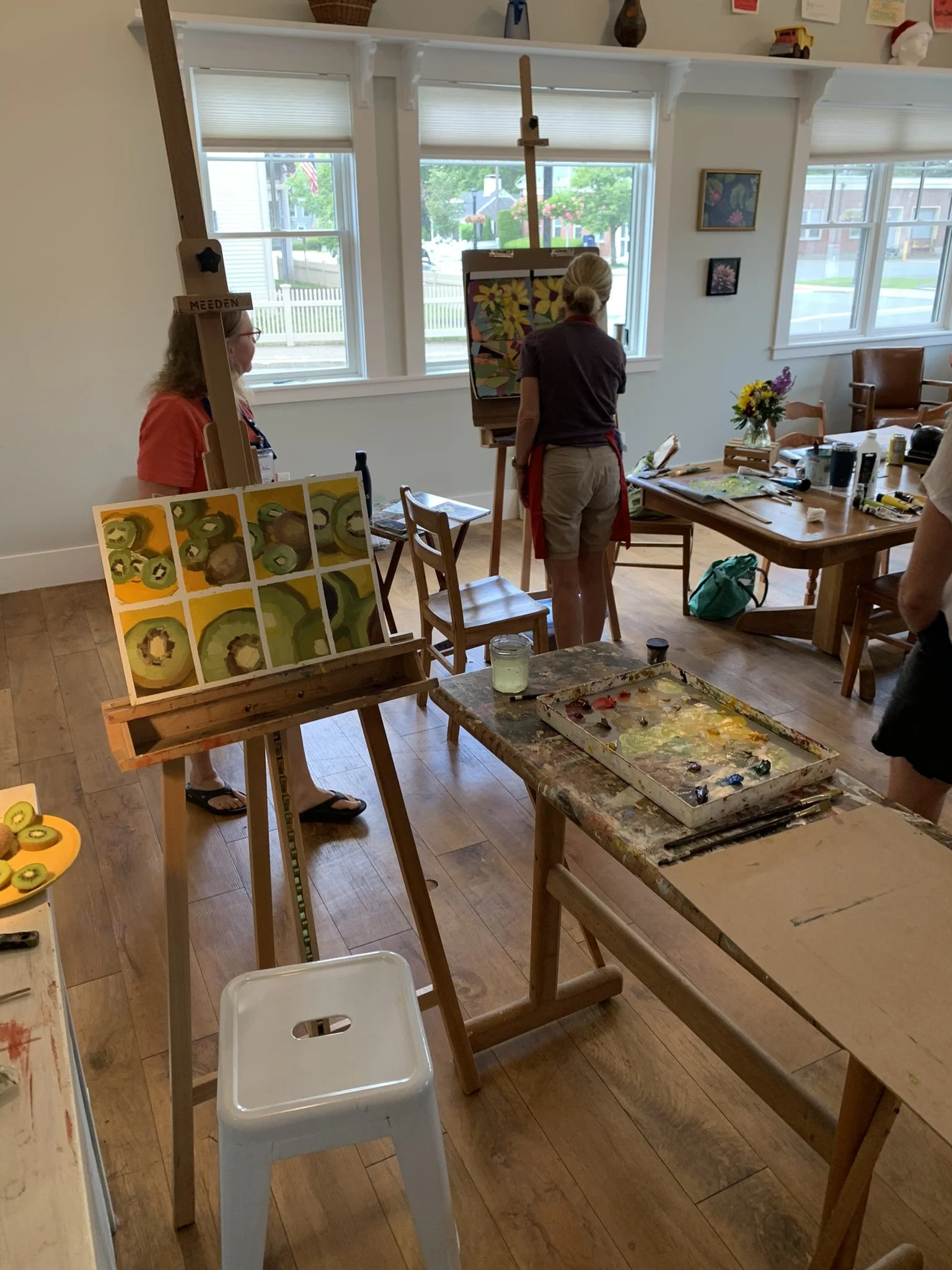
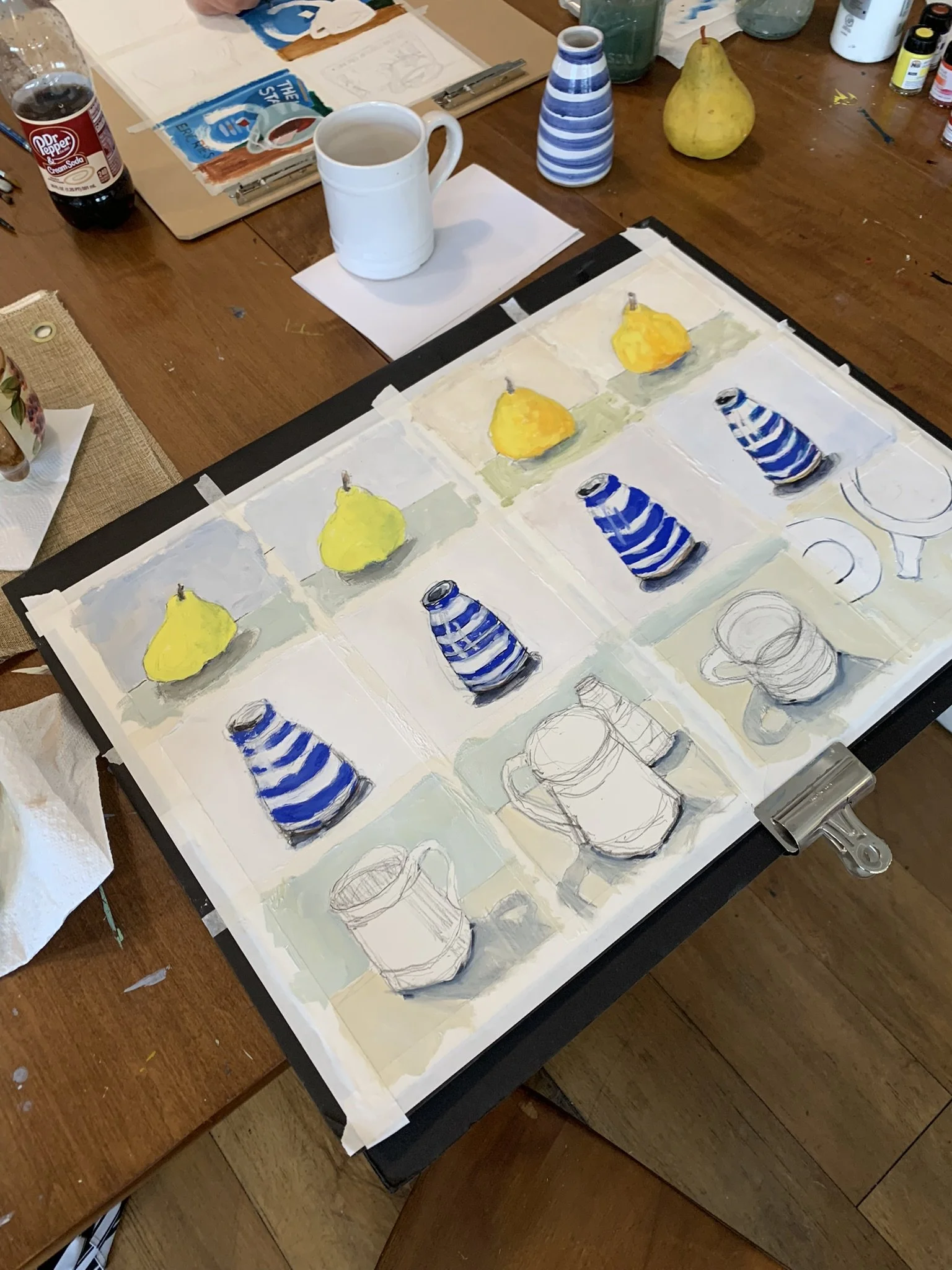
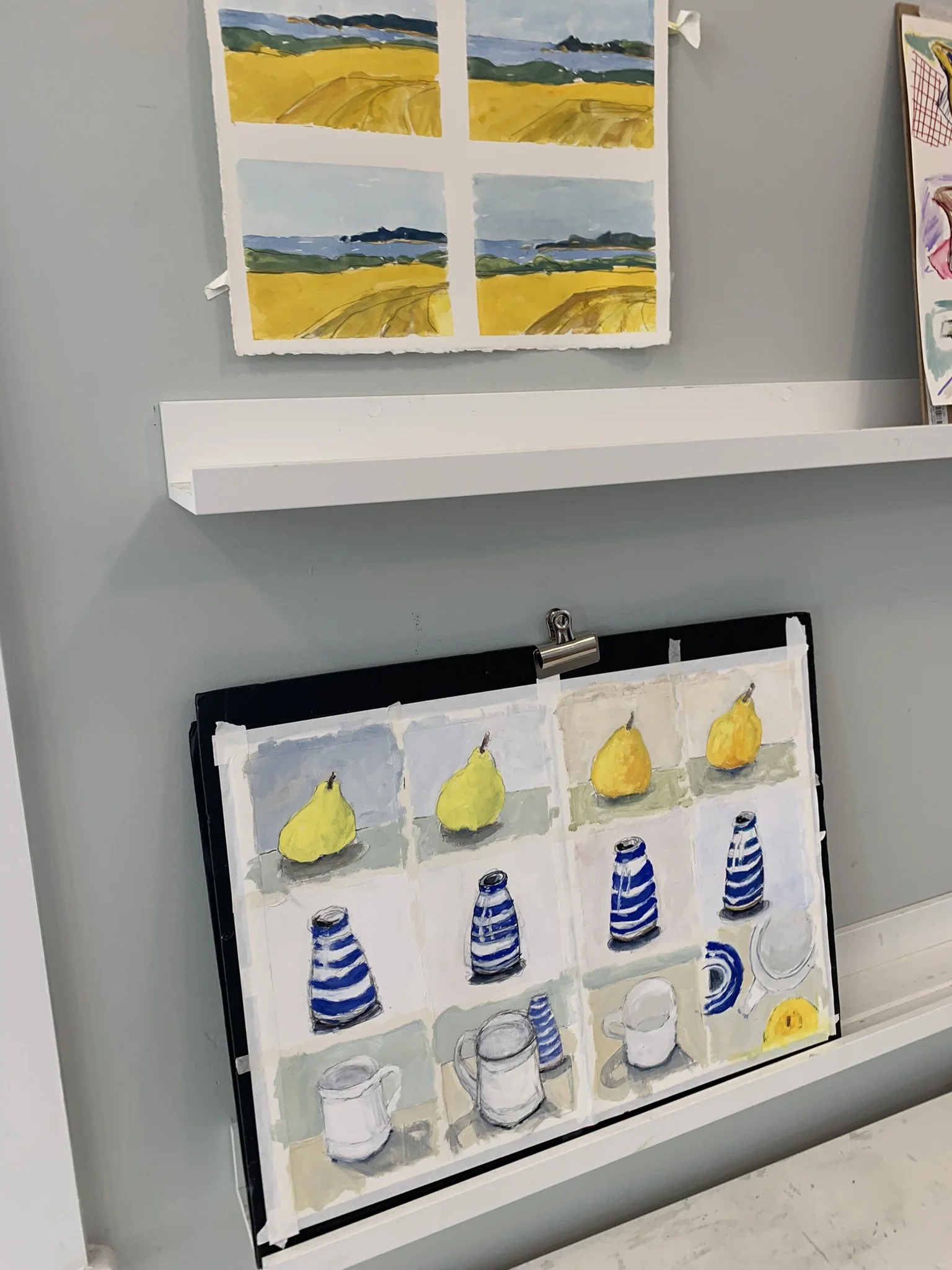
Student examples from Working In A Series workshop at Slow River Studio, Topsfield MA